This page documents my module‑based coursework for this class, including instructional products, evidence of implementation, and brief reflections on learning and classroom application.
Module 1: Multimodal Academic Vocabulary Instruction
My Task / Product – Multimodal Academic Vocabulary Instruction (Documented Through Video Explanation)
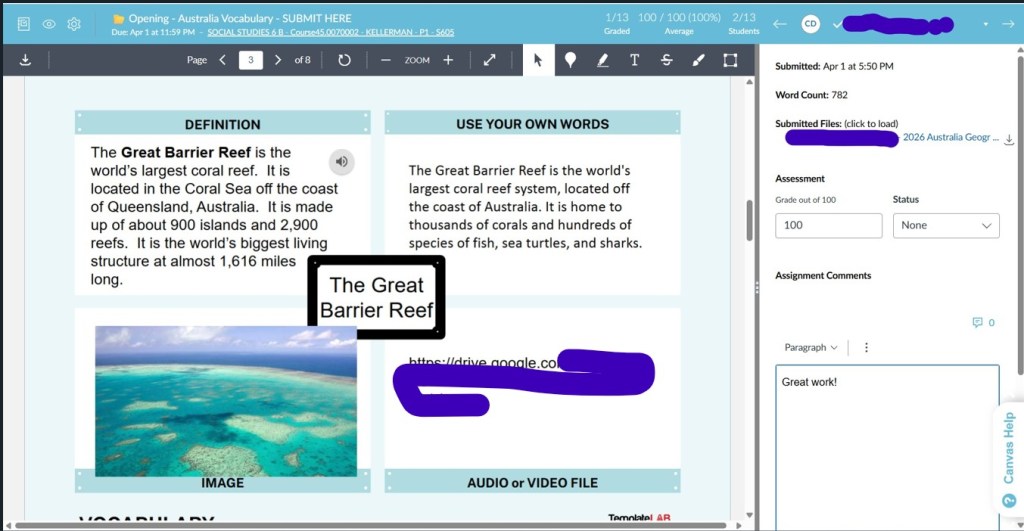
For this module, I designed a multimodal academic vocabulary activity that integrates written definitions, student paraphrasing, visual supports, and oral language practice. The accompanying screen‑recorded video explains the structure of the task and the expectations for student completion, serving as documentation of the instructional design rather than a student‑facing lesson.
Evidence – An anonymized Canvas screenshot showing a completed student vocabulary organizer and the teacher grading interface, demonstrating student application of multimodal vocabulary supports and in‑platform assessment.
Reflection
This module strengthened my understanding of how multimodal instructional design supports both language development and content comprehension for multilingual learners. By combining written definitions, visual supports, and oral explanations, the task provides multiple entry points and allows students to demonstrate understanding in ways that align with their language strengths. The consistent structure of the organizer makes the activity easily differentiable, as supports can be added or removed without changing the task expectations. Using Canvas facilitated direct teacher feedback and efficient assessment, enabling timely instructional adjustments while maintaining grade‑level rigor.
Module 2: Live Formative Assessment Using Game-Based Platforms
My Task / Product – Blooket‑Based Formative Assessment Activity
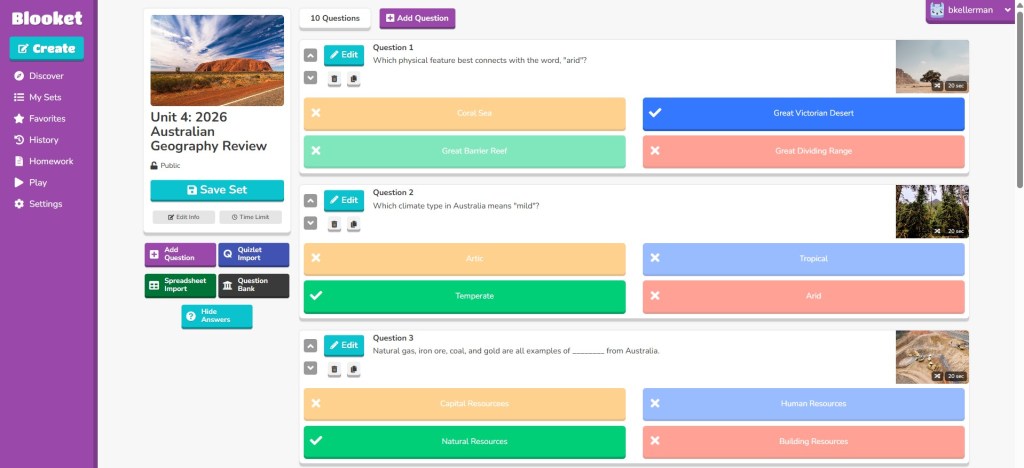
For this module, I designed a Blooket formative assessment aligned exactly to the academic language used on the Unit 4 Australian Geography quiz. The questions, answer choices, and visual hints mirror summative assessment language so students must interpret and apply disciplinary vocabulary rather than rely on memorization or test familiarity.
Evidence
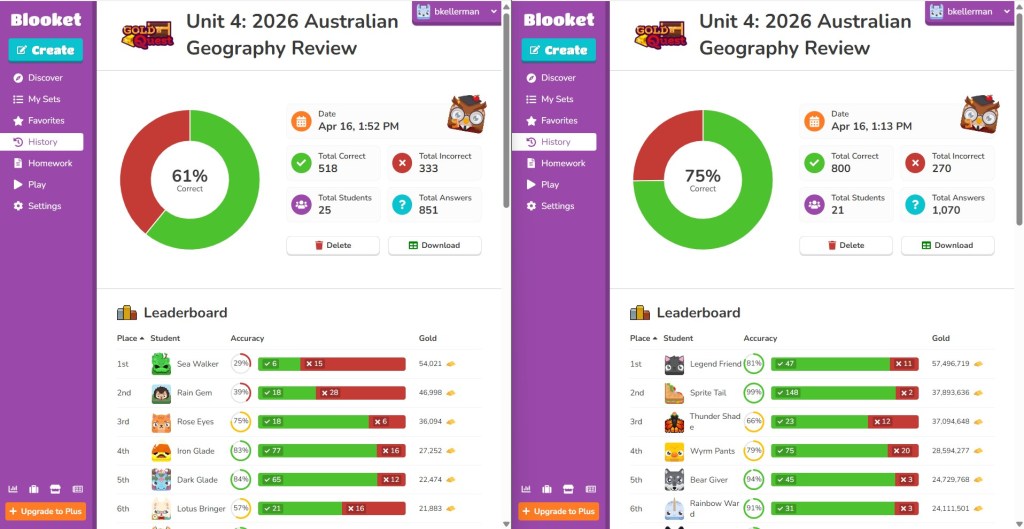
Side‑by‑side anonymized screenshots of fourth‑ and fifth‑period Blooket review results for Unit 4 Australian Geography. Student performance is displayed using pseudonyms to support self‑assessment, while class‑level data informs targeted review and reteaching decisions. Although the formative review uses identical academic language to the quiz, varied performance levels indicate that students must demonstrate genuine language comprehension rather than rely on recall, highlighting the instructional value of the task.
Reflection
This module reinforced the value of formative assessment as a tool for measuring academic language comprehension rather than simple recall. Using Blooket with quiz‑aligned language and visual hints required students to interpret disciplinary vocabulary in context, which prevented reliance on memorization and highlighted genuine areas of need. Displaying results through pseudonyms encouraged student self‑assessment while maintaining a low‑risk learning environment. Comparing class‑level performance data allowed for targeted review and reteaching, ensuring instructional time was focused where students demonstrated the greatest need.
Module 3: Self‑Paced Mastery Practice Using Interactive Video
My Task / Product – Mastery‑Based Independent Practice Workflow Using Edpuzzle
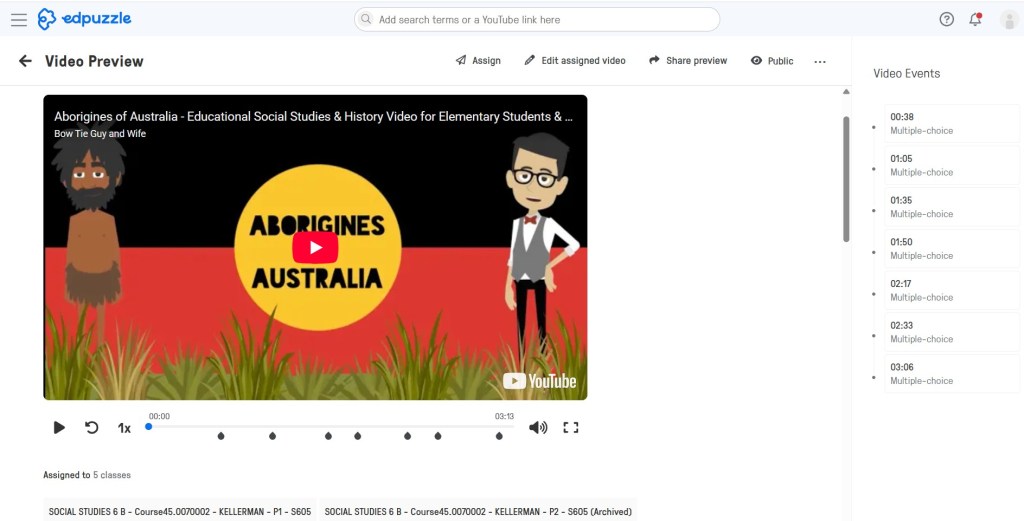
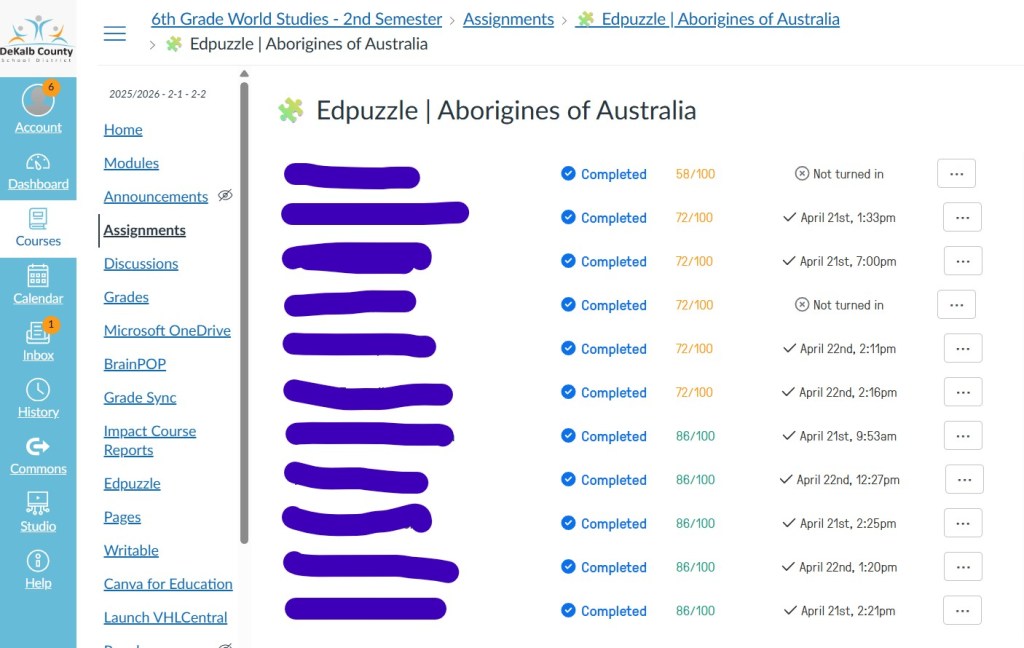
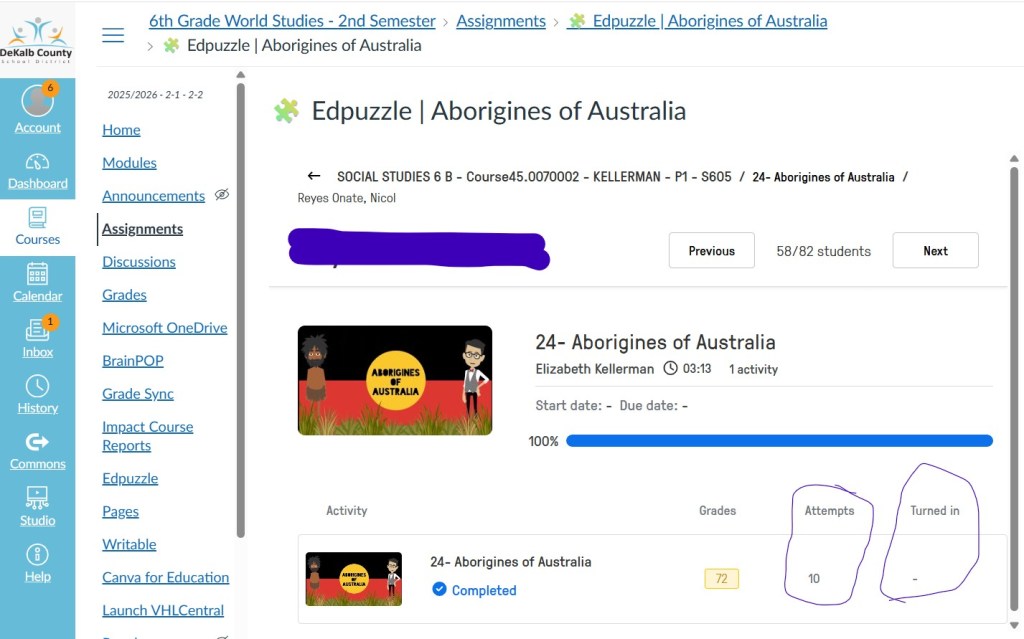
For this module, I implement an Edpuzzle as a weekly independent practice tool integrated through Canvas External Tools. Students engage with instructional video content at their own pace and are required to meet a minimum score of 70%, with unlimited attempts allowed to encourage mastery. Scores automatically sync from Edpuzzle to Canvas and into Infinite Campus, streamlining assessment requirements while maintaining accountability and consistency.
Evidence
An anonymized Canvas screenshot showing an Edpuzzle assignment with completion status, multiple attempts, and real‑time score monitoring used for instructional oversight.
Reflection
This module demonstrated the effectiveness of mastery‑based, self‑paced learning in supporting both academic language development and student motivation. Allowing unlimited attempts gives students a sense of control over their learning and grade, with many choosing to continue until achieving a perfect score rather than stopping at the minimum requirement. Edpuzzle’s accessibility features—including adjustable playback speed, Spanish subtitles, and the ability to rewatch targeted video segments—provide essential support for multilingual learners who benefit from repeated exposure and flexible processing time. Real‑time visibility of completion and progress within Canvas increases student accountability while allowing the teacher to monitor engagement and intervene as needed without increasing grading workload.
Module 4: Multiple Modes of Student Expression Through Choice
My Task / Product – Choice‑Based Academic Task Using a Structured Choice Board
For this module, I designed a structured choice board that allows students to demonstrate understanding of Australian geography, economics, and history through multiple modes of expression. While all tasks align to the same learning standards, students select activities based on their strengths, such as visual mapping, analytical writing, data interpretation, or creative expression. This approach maintains academic rigor while increasing access for multilingual learners.
Evidence
Teacher‑created interactive workbook developed to scaffold independent completion of the Australian Choice Board tasks. The workbook provides guided prompts, visual supports, and structured activities aligned to each choice option, supporting academic language development and reducing cognitive load for multilingual learners.
Reflection
This module highlighted how structured choice increases student engagement while preserving instructional rigor. Offering multiple response formats allows multilingual learners to access grade‑level content without unnecessary language barriers, while still requiring the use of academic vocabulary and concepts. Because all tasks address the same objectives, differentiation occurs through modality rather than lowered expectations. This approach supports equity, increases student ownership, and encourages more authentic demonstrations of understanding.
Module 5: AI‑Assisted Instructional Differentiation and Assessment Efficiency
My Task / Product – AI‑Assisted Instructional Differentiation and Assessment Efficiency
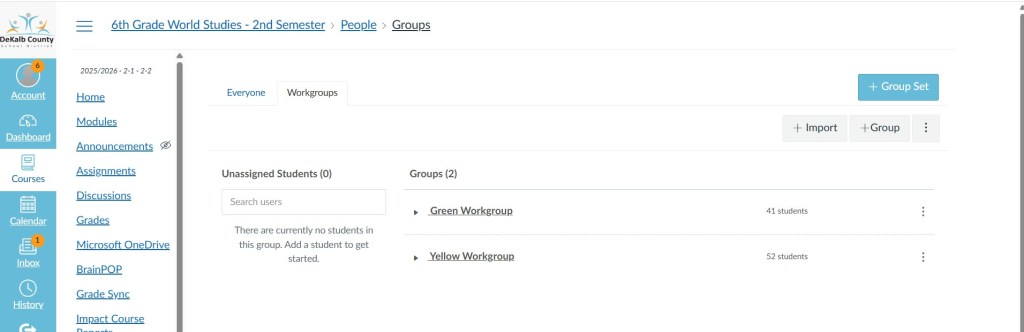
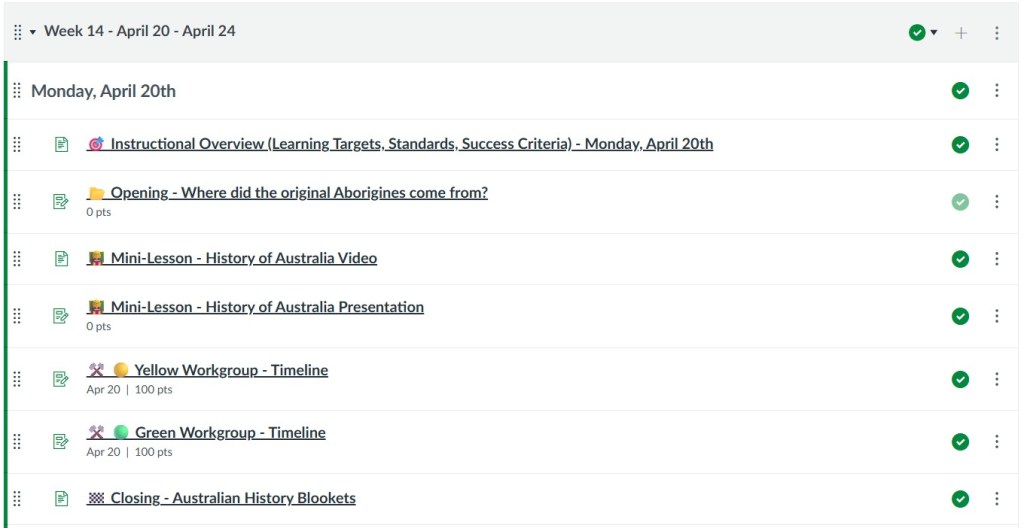
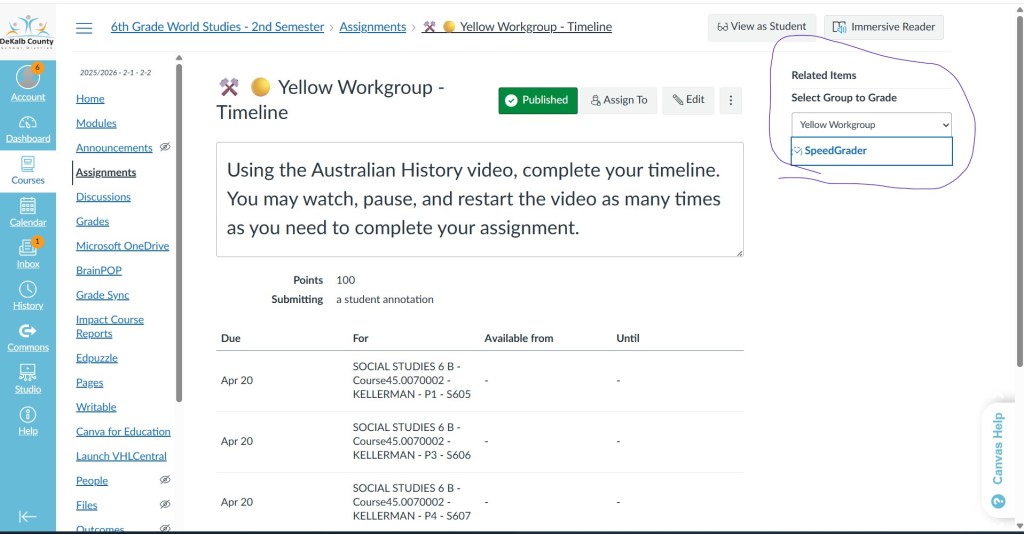
My product consists of two instructional workgroups—Yellow (Composite Proficiency Level < 2.5) and Green (Composite Proficiency Level > 2.5)—created within Canvas to support differentiated instruction and assessment. AI was used to instruct the teacher on how to create and manage workgroups in Canvas so assignments and grading could be differentiated by workgroup while maintaining shared, standards‑aligned objectives. This structure allows instructional rigor to remain consistent while avoiding bias related to students’ language abilities. Students are aware of their assigned workgroup and routinely locate Yellow‑ or Green‑coded differentiation within Canvas lessons.
Canvas People view showing two instructional workgroups—Yellow and Green—used to support differentiated instruction and assessment within the same course.
Evidence – Evidence of this workflow includes Canvas‑based workgroup implementation and differentiated assignment structures.
Canvas lesson view demonstrating differentiated classwork options assigned to Yellow and Green workgroups with shared instructional goals but scaffolded pathways.
Canvas SpeedGrader view illustrating assessment aligned to workgroup‑specific expected output while maintaining standards‑based evaluation.
Reflection
This process demonstrated how AI can function as a just‑in‑time professional learning tool to help solve a specific instructional problem. Rather than relying on extensive Canvas documentation or generic training resources, AI provided targeted guidance that allowed immediate classroom application. Establishing differentiated workgroups in Canvas improved clarity for students, supported equitable assessment practices, and significantly reduced the instructional and grading friction associated with language‑based differentiation. In this workflow, AI supported teacher decision‑making and instructional efficiency without replacing professional judgment.

